At first glance, lip balm seems like the simplest product in the beauty aisle: smooth it on, and your lips instantly feel softer. Yet many people experience the frustrating cycle of applying balm, feeling relief for a moment… and then noticing their lips feel even drier, more cracked, or more dependent on frequent re-application.
Let’s break down why some lip balms make lips dry, what ingredients are responsible, and how to choose balms that genuinely repair and protect your lips long-term.
Most lip balms promise hydration, healing, and long-lasting comfort. Not all products achieve this. We need to understand exactly what lips need.
Your lips are different from the rest of your skin: They have a very thin stratum corneum (surface layer), lack oil glands, and they are more exposed to environmental stressors (wind, cold, sun)
Because of this, lips need: occlusion, emollience, and moisture retention. But not all balms provide these effectively.
A good lip balm should deliver a balance of:
-
These ingredients attract and bind water to the skin. For example:
Glycerin
Hyaluronic acid
But humectants alone can actually pull water out if the environment is dry, unless they’re paired with occlusives.
-
These ingredients soften and smooth the skin. Examples:
Plant oils (e.g., jojoba, almond, raspberry seed)
Esters (e.g., isopropyl myristate)
Fatty butters (e.g., shea, cupuaçu)
-
These ingredients form a barrier to prevent water loss. Examples:
Petrolatum
Lanolin
Beeswax & microcrystalline wax
Dimethicone
If a balm lacks occlusives, the moisture attracted by humectants can simply evaporate, leaving lips dry again.
Why Some Lip Balms Dry Your Lips Out
Here are the most common formulation reasons why a lip balm can actually worsen dryness over time:
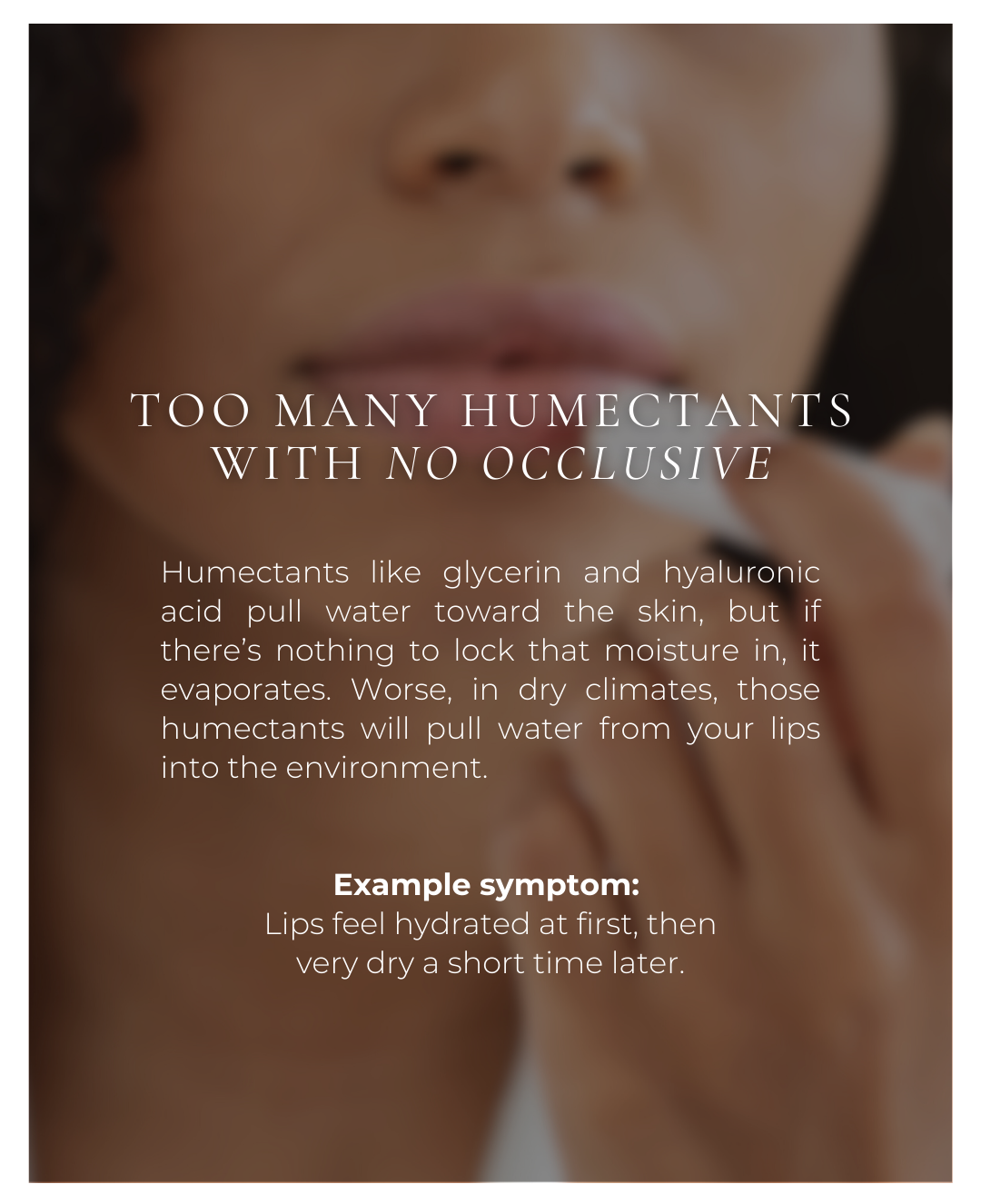
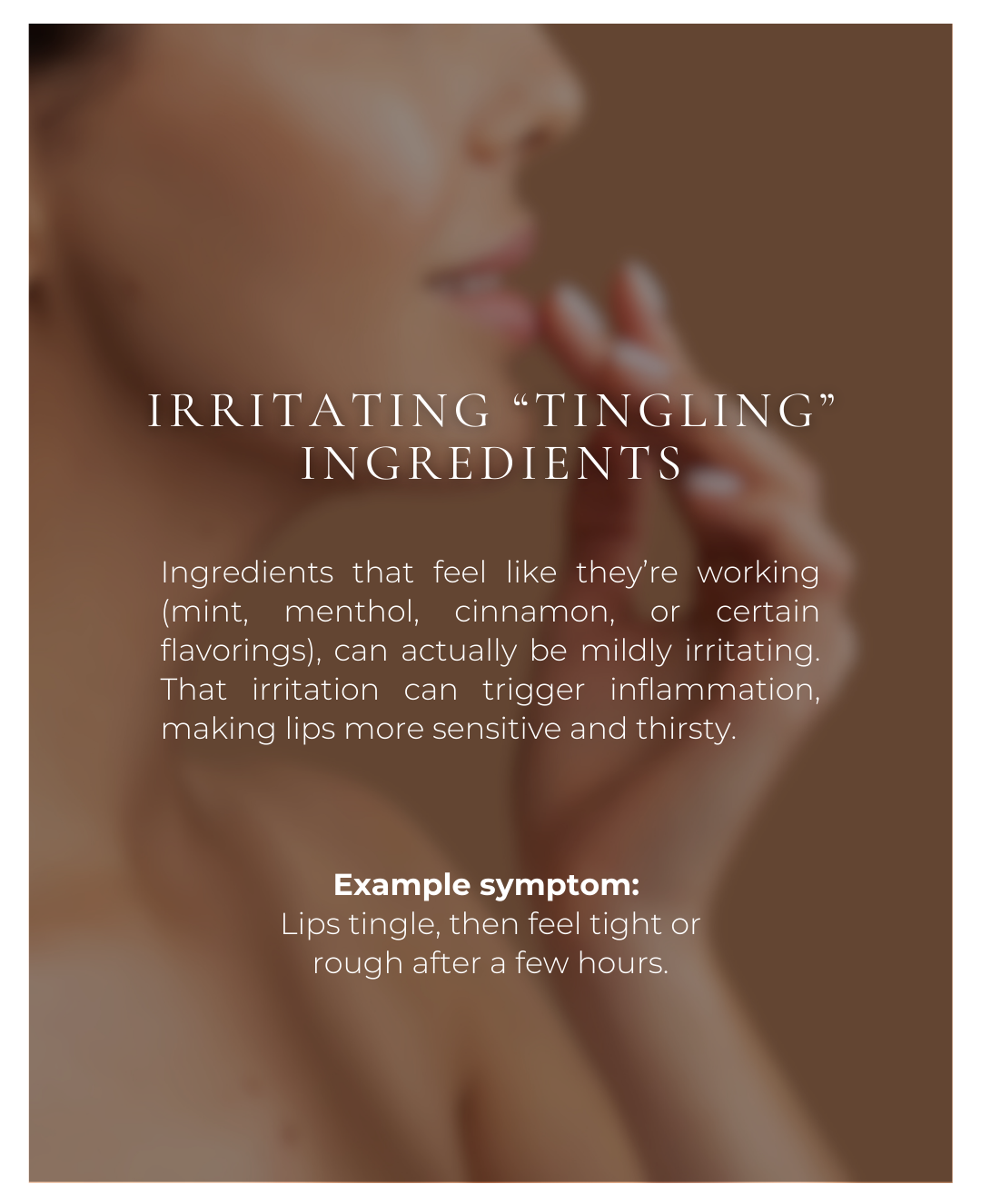
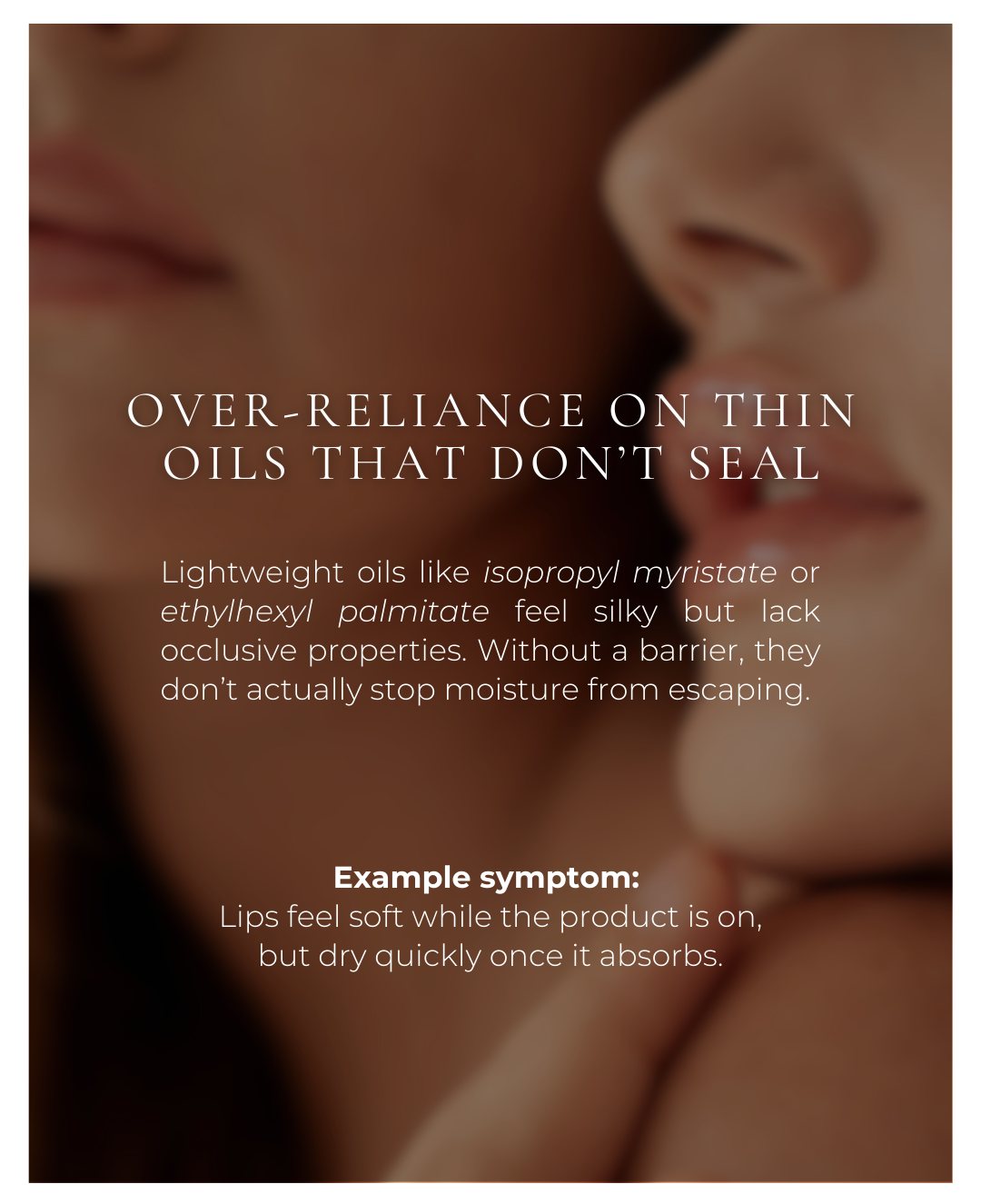
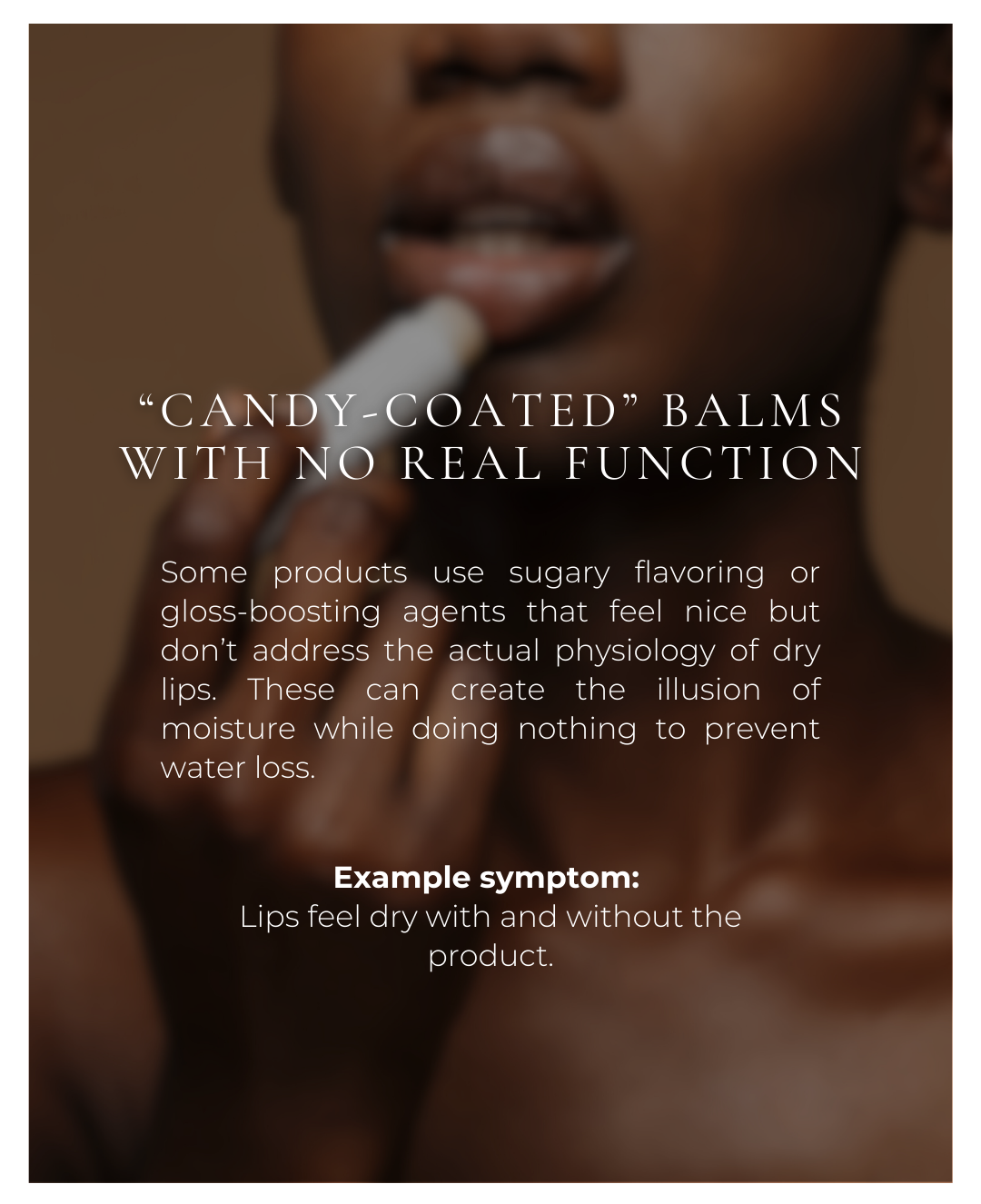
How to Choose a Truly Hydrating Lip Balm
Look for products that combine:
A strong occlusive: this is the anchor that prevents moisture loss:
Petrolatum
Beeswax / microcrystalline wax
Dimethicone
Lanolin (if tolerated)
Balanced Emollients: to smooth texture and support barrier repair:
Shea butter
Cupuaçu butter
Mango or cocoa butter
Plant oils (jojoba, raspberry seed)
Supportive Actives: optional but helpful:
Ceramides
Vitamin E (tocopherol)
Squalane
Hyaluronic acid (paired with occlusive)
Avoid:
Products that rely only on fragrance, mint/cinnamon, or candy flavoring
Balms that are mostly gloss or oil without waxes
Too many strong humectants in dry climates
Best Lip Balms That Will NOT Dry Your Lips
Ole Henriksen Pout Preserve Peptide Lip Treatment
Rose Lane Baume à lèvres multi-soin
Violette FR Balm Amour
Clinique Moisture Surge Lip Hydro‑Plump Treatment
Glossier Balm Dotcom Skin Salve
Vaseline Lip Therapy Original
Lanolips The Original 101 Ointment
Stay updated by following our Instagram @themodernstylemuse .
Don’t miss out - catch up with the latest articles below!